
For large hotel chains, hospitals, and professional laundry service providers, linen management is far more than simply tracking sheets, towels, uniforms, and medical textiles. When thousands or even hundreds of thousands of textile items are involved, every small improvement in inventory accuracy, washing cycle management, and labor efficiency can directly impact operational costs.
Imagine a hotel group managing more than 5,000 beds across multiple locations. Every day, thousands of pieces of linen move between guest rooms, laundry facilities, storage areas, and transportation channels. Without an efficient tracking system, procurement teams and operation managers often face challenges such as lost items, inaccurate inventory records, excessive manual counting, and unnecessary replacement costs.
This is why more organizations are investing in RFID laundry management solutions. However, for purchasing departments, the key question is not only “Which RFID tag works?” but also “Which RFID laundry tag delivers the best return on investment?”
Choosing the right balance between purchase price, durability, and performance is essential. A low-cost tag that fails after several washing cycles may increase long-term expenses, while a reliable RFID UHF laundry tag with high-temperature resistance and long reading distance can significantly reduce operational costs over its entire service life.
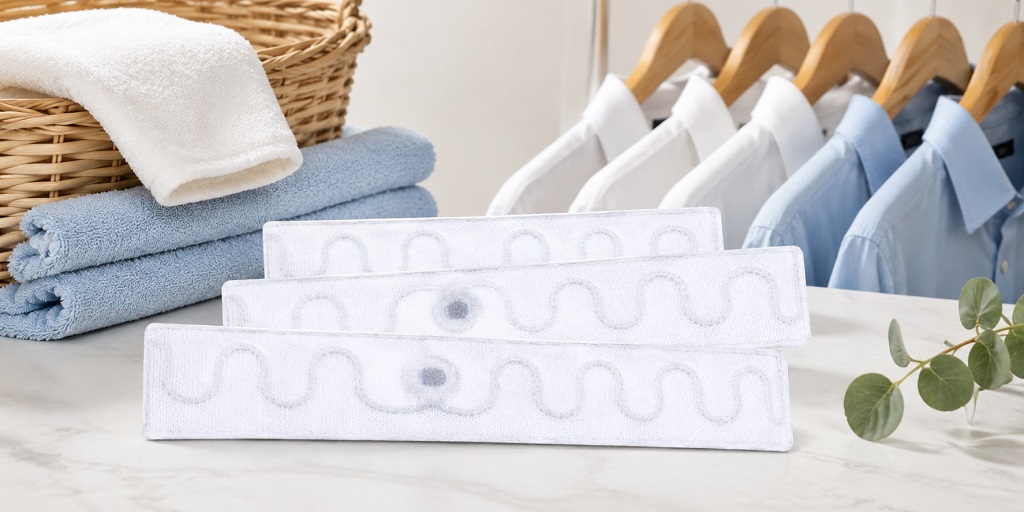
For B2B buyers, especially hotel groups and hospitals, procurement decisions are usually based on total cost of ownership (TCO), not only the initial purchase price.
When purchasing tens of thousands or even millions of RFID laundry tags, the unit price becomes an important factor. A small difference of a few cents per tag can create a significant impact on the overall budget.
For example:
10,000 RFID laundry tags × $0.05 price difference = $500 saved
100,000 RFID laundry tags × $0.05 price difference = $5,000 saved
1,000,000 RFID laundry tags × $0.05 price difference = $50,000 saved
However, the cheapest option is not always the most economical choice. Procurement teams need to evaluate:
How many washing cycles can the tag withstand?
Can it survive high-temperature washing and drying?
Will the reading performance remain stable after repeated use?
How much labor is required if tags fail and need replacement?
A professional RFID laundry tag supplier should help customers optimize both upfront investment and long-term operating expenses.
For businesses looking for customized solutions, choosing a reliable manufacturer that provides Custom RFID Laundry Tags allows buyers to match tag performance with their actual application requirements, including washing temperature, attachment method, chip selection, and reading distance.
For large-scale RFID projects, working directly with an experienced OEM manufacturer can provide significant cost advantages compared with purchasing through distributors or trading companies.
A direct factory supply model offers several benefits:
RFID laundry tags are produced in large quantities using automated manufacturing processes. When purchasing directly from a factory, buyers can avoid additional distributor margins and obtain more competitive wholesale pricing.
This is especially important for:
International hotel groups
Hospital networks
Commercial laundry companies
Textile rental companies
Uniform management providers
Large-volume procurement also creates opportunities for customized pricing structures based on order quantity, packaging requirements, and long-term cooperation plans.
Different industries have different requirements.
A hospital may require tags with stronger chemical resistance because medical textiles are exposed to frequent sterilization processes.
A luxury hotel may focus more on invisible installation methods to maintain guest experience.
A laundry service company may prioritize long reading distance to improve sorting efficiency.
Working directly with an RFID manufacturer allows buyers to customize:
RFID chip type
Tag size
Memory capacity
Logo printing
Encoding information
Attachment method
This flexibility helps companies avoid paying for unnecessary features while ensuring the RFID solution meets their operational needs.
When purchasing directly from an OEM factory, customers can have clearer visibility into production standards, testing procedures, and quality control processes.
Professional RFID laundry tags require strict testing before shipment, including:
Waterproof testing
Washing cycle testing
Temperature resistance testing
Read performance testing
Chemical resistance testing
For large projects, consistent quality is just as important as competitive pricing.
Many purchasing managers initially focus on reducing the purchase price. However, the real cost of RFID laundry management comes from the entire product lifecycle.
A low-quality tag may create hidden expenses such as:
Frequent replacement costs
Additional labor for re-tagging
Inventory errors caused by missing tags
Reduced efficiency during laundry sorting
For example, if a hotel purchases 50,000 laundry tags and 10% fail within the first year, the company not only needs to buy replacement tags but also spend additional labor hours locating, removing, and reinstalling new tags.
The actual cost may become much higher than the original savings.
This is why durability is a critical factor when selecting RFID laundry tags.
A reliable High Temperature Laundry RFID Tag is designed to withstand demanding laundry environments, including:
High-temperature washing
Industrial drying processes
Repeated ironing
Chemical exposure
Continuous mechanical stress
High-quality RFID laundry tags are usually made with durable materials and sealed structures to protect the internal RFID chip and antenna.
For industrial laundry applications, a tag should not only survive one washing cycle—it should maintain stable performance through hundreds of washing cycles.
When evaluating RFID suppliers, buyers should always consider lifecycle value instead of only comparing the initial quotation.
Large hotels and hospitals often process thousands of linen items every day. Traditional manual counting methods are time-consuming and vulnerable to human errors.
RFID technology changes this process by enabling automatic identification and tracking.
Unlike barcode systems that require direct visual scanning, RFID tags can be read without line-of-sight. Multiple tagged items can also be identified simultaneously, improving inventory efficiency.
A professional Long Range RFID Laundry Tag provides important advantages in large-scale laundry environments.
In traditional operations, employees may need hours to manually count hundreds or thousands of textile items.
With UHF RFID technology, workers can quickly identify large quantities of tagged items through RFID readers, reducing manual workload and improving inventory accuracy.
Laundry warehouses often manage different categories of textiles:
Bed sheets
Pillow covers
Towels
Patient gowns
Surgical textiles
Staff uniforms
Long-range RFID tags allow managers to track when items enter and leave storage areas, making it easier to monitor inventory levels and prevent shortages.
Hotels and hospitals lose significant amounts of money every year due to missing or misplaced linen.
RFID tracking provides historical data about:
Where an item was used
How many washing cycles it completed
When it was returned
Whether it needs replacement
This information helps companies optimize purchasing decisions and reduce unnecessary textile replacement.
The biggest advantage of RFID laundry management is not only automation—it is the ability to make better business decisions using accurate data.
For large organizations, RFID systems can generate measurable returns through:
Automated identification reduces the need for manual counting and recording.
Better tracking helps identify lost items and reduces unnecessary purchasing.
Monitoring washing cycles allows managers to replace textiles at the right time instead of replacing them too early.
Faster sorting, counting, and inventory management improve overall workflow.
For a large hotel or hospital, even a small percentage improvement in linen utilization can represent significant annual savings.
Before placing a large order, purchasing teams should evaluate suppliers based on several key factors:
Choose a supplier with experience producing RFID tags for industrial applications.
Every project has different requirements. A capable manufacturer should provide customized solutions instead of only standard products.
Ask suppliers about:
Washing cycle tests
Temperature tests
Waterproof tests
Reading distance tests
Before a large purchase, always test samples in real working conditions.
A professional RFID manufacturer should provide samples for:
Laundry machine testing
Heat resistance testing
Reader compatibility testing
Installation testing
For large hotel chains, hospitals, and commercial laundry providers, choosing an RFID laundry tag is a long-term investment decision.
The best solution is not necessarily the cheapest tag available. The ideal RFID tag should provide the right balance between wholesale pricing, durability, and performance.
A high-quality RFID UHF laundry tag with high-temperature resistance and long-range reading capability can help businesses reduce operational costs, improve inventory accuracy, and achieve better return on investment.
Before making a bulk purchase, request free samples and evaluate the tags through real washing and tracking processes. Testing performance in your actual environment is the best way to ensure your RFID investment delivers long-term value.
Contact OEM RFID Factory today to discuss your project requirements and find the most suitable RFID laundry tag solution for your business.
No. 225 , 2F , Hombo innovation Technology Industrial park ,Qingning Rd .Longhua district ,
Correo electrónico : info@zjiotech.com
Principal Lisa : jimmy@zjiotech.com
(Servicios al cliente de 24 horas.)
Teléfono : +86(0)755 21013852


 español